
Why Testing Can't Be an Afterthought in the Cloud Era of Dynamics 365
Microsoft Dynamics 365 (D365) has become a cornerstone for digital transformation in modern enterprises, but the shift to cloud and Microsoft's rapid update cadence have made robust, proactive testing more critical than ever.

Microsoft Dynamics 365 (D365) has become a cornerstone for digital transformation in modern enterprises, but the shift to cloud and Microsoft's rapid update cadence have made robust, proactive testing more critical than ever.
The Pace and Complexity of D365 Updates
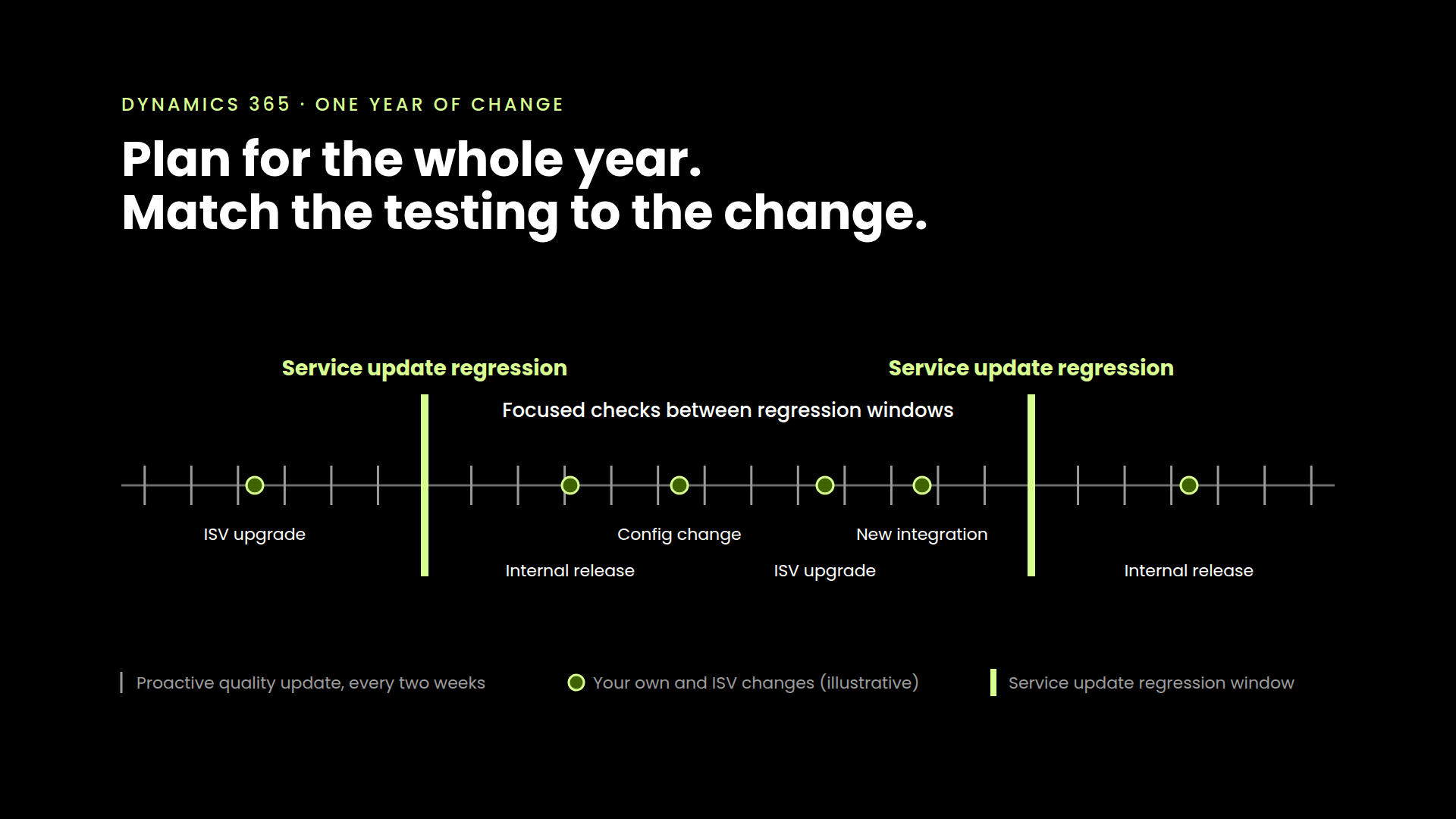
Microsoft has moved Dynamics 365 Finance and Operations to a One Version update model, releasing four major updates each year — in February, April, July, and October. While this new schedule gives businesses more flexibility and time to prepare, it also means environments are always evolving. That's why it's crucial for organizations to test updates in their own environments to catch any issues before they reach production.
Why Testing Can't Be an Afterthought
- Frequent, Automatic Updates: In the cloud era, updates are pushed automatically and frequently, sometimes with little lead time. This means organizations must be ready to validate new features, bug fixes, and security enhancements on a regular basis.
- Customization and Integration Risks: While Microsoft tests standard features, every organization customizes D365 to fit unique processes and integrates it with other systems. Updates can inadvertently break custom workflows, disrupt integrations, or impact data flows — issues Microsoft's own testing won't catch.
- Business Continuity at Stake: Poorly tested updates can cause operational disruptions, data issues, and frustrated users, harming business continuity and ROI.
- Regulatory and Data Integrity Concerns: Updates can affect compliance-related features or data handling. Without proper validation, organizations risk falling out of regulatory compliance or suffering data integrity issues.
Best Practices for D365 Testing in the Cloud Era
- Shift Left Testing: Start testing early in the development/update cycle to catch issues before they escalate.
- Automated Testing: Ensures every update is vetted quickly and thoroughly, reducing manual effort and human error.
- End-to-End Scenario Validation: Validates that all integrated workflows and customizations function as intended post-update.
- Clear Testing Objectives: Define what needs to be validated (core processes, compliance, integrations) for each update.
- Continuous Testing in CI/CD: Integrate testing into DevOps pipelines for ongoing quality assurance with every change.
The Bottom Line
Testing is not just a technical checkbox — it is a business safeguard. In the cloud era of D365, where updates are frequent and automatic, treating testing as an afterthought exposes organizations to unnecessary risk. Proactive, automated, and comprehensive testing strategies are essential to ensure that every update enhances your business rather than disrupts it.
Don't let your next D365 update be the one that breaks your business. Make testing a core capability, not a last-minute checkbox.


See it in your environment, today.
Real test scenarios. Real results. No sandbox demo.