
What Is Microsoft's One Version Model for Dynamics 365 Finance and Operations
If your organization runs Microsoft Dynamics 365 Finance and Operations, you're likely already working within Microsoft's managed update model known as One Version. This model defines how and when updates are delivered and ensures all F&O customers stay cu
What it means for your business and how to stay ready for every update
If your organization runs Microsoft Dynamics 365 Finance and Operations, you're likely already working within Microsoft's managed update model known as One Version. This model defines how and when updates are delivered and ensures all F&O customers stay current with Microsoft's latest features and security improvements.
What Is the One Version Model?
Microsoft's One Version model is a unified release approach designed to keep all Dynamics 365 Finance and Operations apps running on the latest version of the product. Instead of delivering large version upgrades every few years, Microsoft now pushes regular quarterly service updates and twice-yearly feature updates that all customers must adopt. The goal is to keep every customer current, secure, and able to take advantage of the latest capabilities without major disruption.
Microsoft One Version Service Updates FAQs
How the One Version Update Schedule Works in Finance and Operations
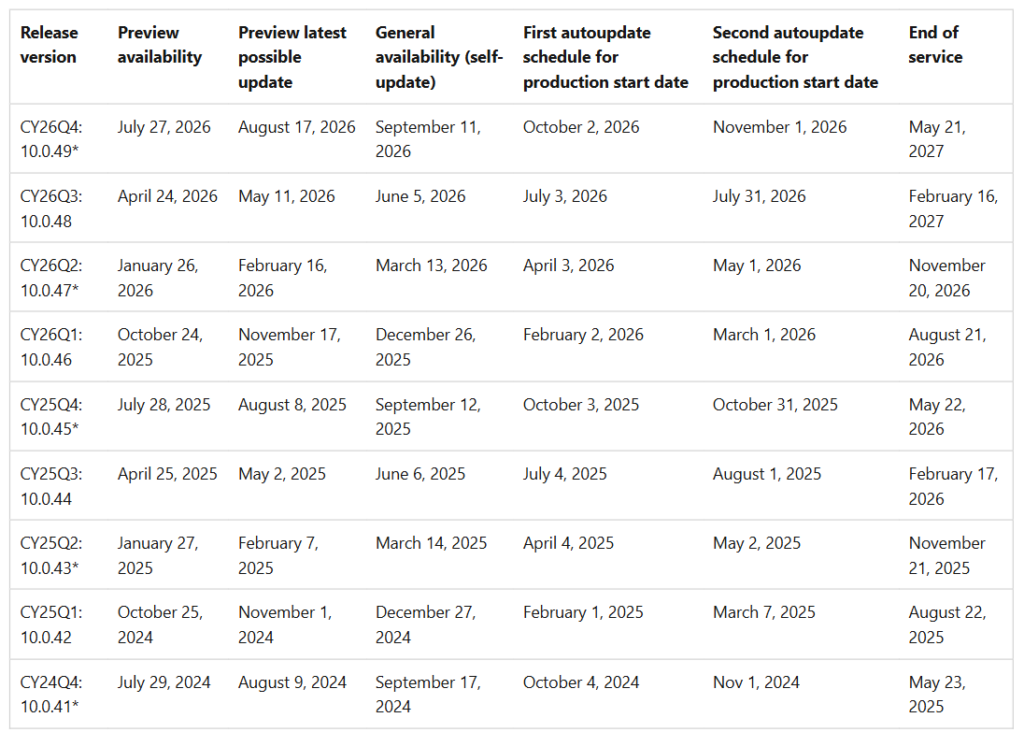
- Quarterly Releases: Updates are delivered in February, April, July, and October.
- Update Requirements: Customers must take at least two updates per year and may pause one update at a time.
- Each service update includes performance improvements, bug fixes, and new features that help your system stay secure, compliant, and aligned with Microsoft's evolving roadmap.
- Flexible Auto-Update Windows: Each release offers two auto-update windows, spaced four weeks apart. If no action is taken, Microsoft will apply the update automatically.
Organizations are strongly encouraged to validate updates in sandbox environments early using realistic data and real-world processes. See the Official Microsoft Targeted Release Schedule Here
What About Proactive Quality Updates?
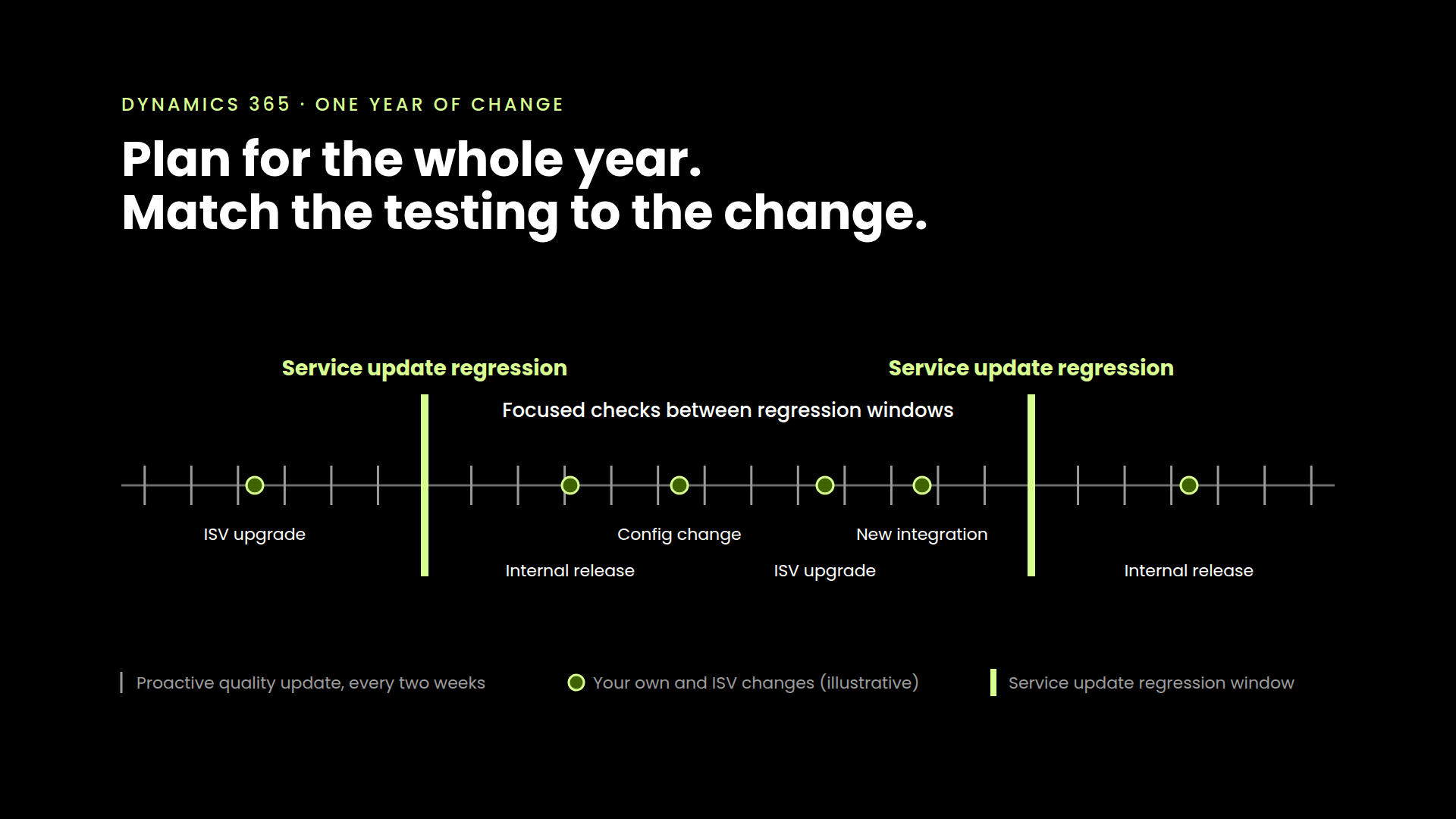
As part of the One Version approach, Microsoft also releases Proactive Quality Updates (PQUs). These monthly updates are automatically applied to all Dynamics 365 applications and cannot be delayed or opted out of. To give teams time to prepare, Microsoft provides early access to each PQU in sandbox environments roughly one week before it is applied to production.
Learn more about proactive quality updates | View the quality update schedule
How Business Central's Update Cadence Differs
Although not part of the One Version model, Dynamics 365 Business Central also follows a consistent update pattern. Microsoft delivers two major updates per year — Wave 1 (April) and Wave 2 (October) — with monthly cumulative updates between waves. Customers can pause production updates for up to 60 days to test for compatibility issues.
Why Should I Test or Care About This?
Each update may introduce changes to platform behavior, new features that interact with existing customizations, or modified APIs and integrations. Without testing, you risk financial discrepancies in reporting, delayed shipments or purchases, broken integrations with upstream or downstream systems, and user confusion and escalated support tickets. The bottom line: you cannot afford to skip testing, even for updates labeled as minor.
How Can I Stay Ahead and Ensure a Smooth Update Process?
- Know the release schedule: Monitor Microsoft's targeted release calendar.
- Test early in sandbox: Use realistic test data and simulate key business flows.
- Automate what you can: Manual testing is repetitive, time-consuming, and difficult to scale.
- Stay informed and evolve your test library: As your business changes, so should your tests.
The Role of Automated Testing for Microsoft D365
In a One Version world, automated testing is no longer optional. It is the only sustainable way to reduce risk, move quickly, and keep your systems stable. Automated testing helps organizations reduce the risk of defects, shorten testing cycles from weeks to hours, increase confidence in each release, and lower the risk of downtime or disruption.
Explore TheTestMart's full Guide to Automated Testing for Microsoft Dynamics 365 to learn how leading teams manage updates with less effort and greater confidence.
About TheTestMart
At TheTestMart, we have built our testing platform specifically for Microsoft Dynamics 365 environments, including both Finance and Operations and Business Central. We deliver a prebuilt test library across core modules, test maintenance with every Microsoft update, a no-code builder so analysts can manage testing, and auto-generated documentation to support audit and training efforts.
Ready to simplify your testing and stay ahead of every update? Connect with TheTestMart Today


See it in your environment, today.
Real test scenarios. Real results. No sandbox demo.